> For the complete documentation index, see [llms.txt](https://docs.shoplift.ai/llms.txt). Markdown versions of documentation pages are available by appending `.md` to page URLs; this page is available as [Markdown](https://docs.shoplift.ai/test/theme-testing/create-a-theme-test.md).
# Create a Theme Test
A theme test compares your entire live Shopify theme against an alternate version. Everything can differ between the two themes: header, footer, global styles, colors, fonts, cart type, and every template.
### Set up your theme test
{% stepper %}
{% step %}
### Select your original (A)
Open Shoplift and click **Create a test**.
Then select **Test Content.**
Select **Test a theme or global element**.
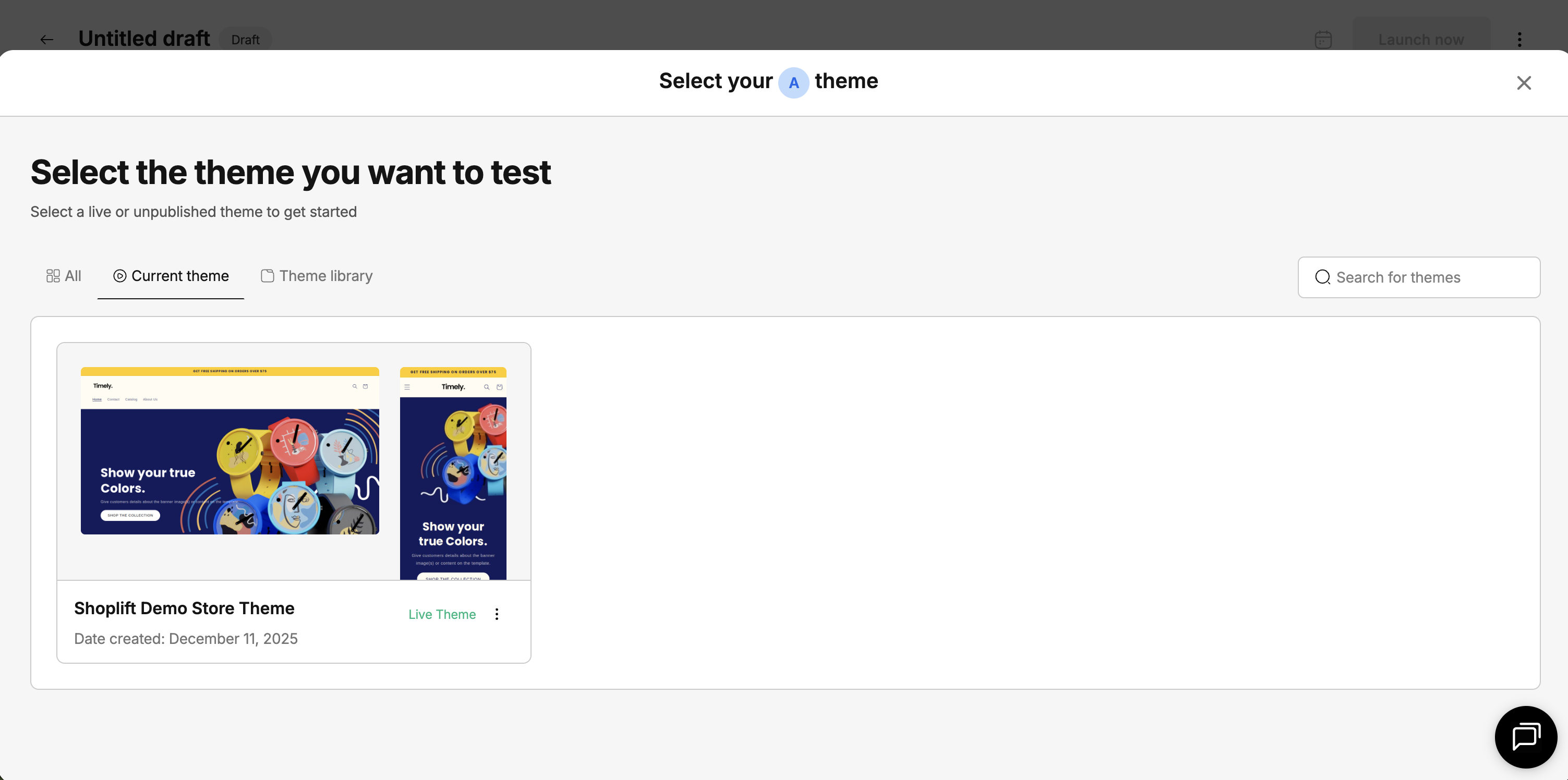
This opens the theme drawer, where you can see the themes in your Shopify theme library. Your live (published) theme is shown by default. Select it to use as your **A (Original)**.
{% hint style="info" %}
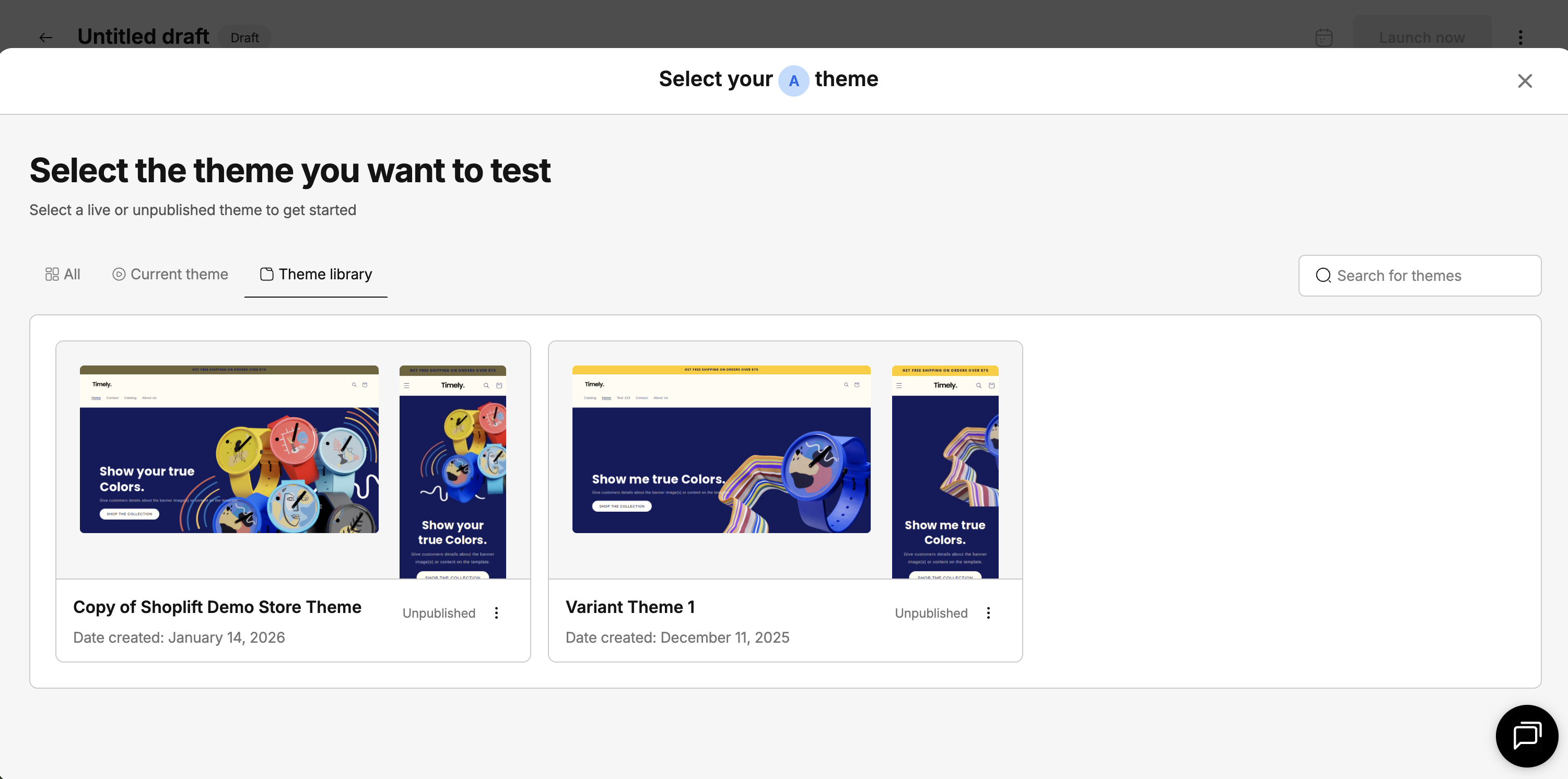
You can also draft a theme test on an unpublished theme if you want to prepare a test in advance and launch it once that theme goes live. Click the **Theme Library** tab in the drawer to view your unpublished themes and select one as your original.
{% endhint %}
{% endstep %}
{% step %}
### Select your variant (B)
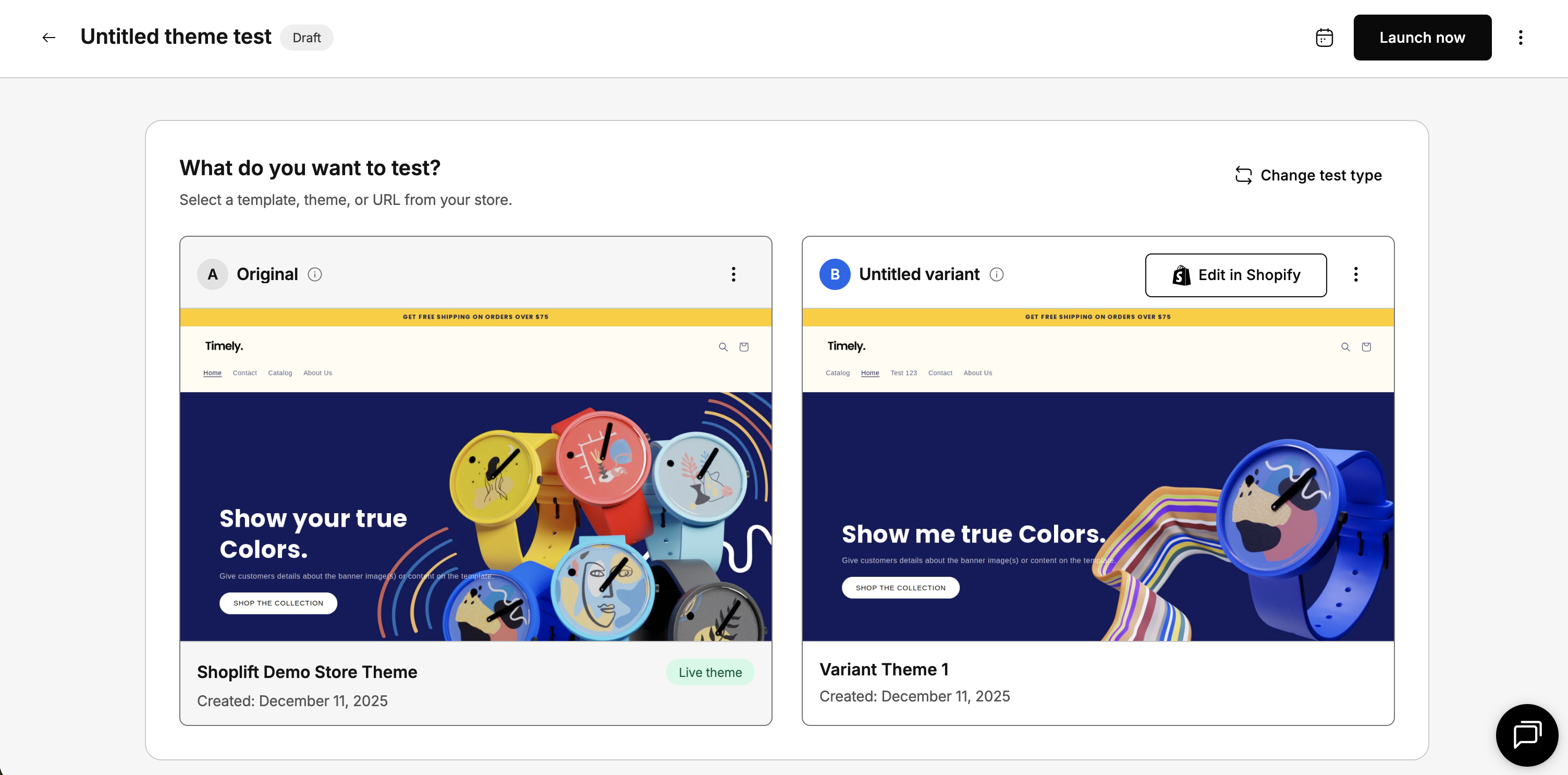
Next, choose the theme you want to test against your original. Your **B (Variant)** can be any theme in your library. Select the theme to load it into your test draft.
{% hint style="info" %}
**FAQ: How many themes can I have in my library?**
The amount of themes you can have in your library depends on your Shopify plan. Shopify Plus stores can have up to 100 themes, while other Shopify plans can have up to 20.
{% endhint %}
{% hint style="info" %}
**FAQ: Why are some themes "missing templates?"**
Some themes might be missing templates that are currently assigned to pages on your site by your live theme. These templates are required for your site to function normally. To resolve this issue, see [Theme Compatibility](/test/test-compatibility.md).
{% endhint %}
If your variant theme is already set up the way you want it, skip ahead to step 4.
{% endstep %}
{% step %}
### Edit your variant theme
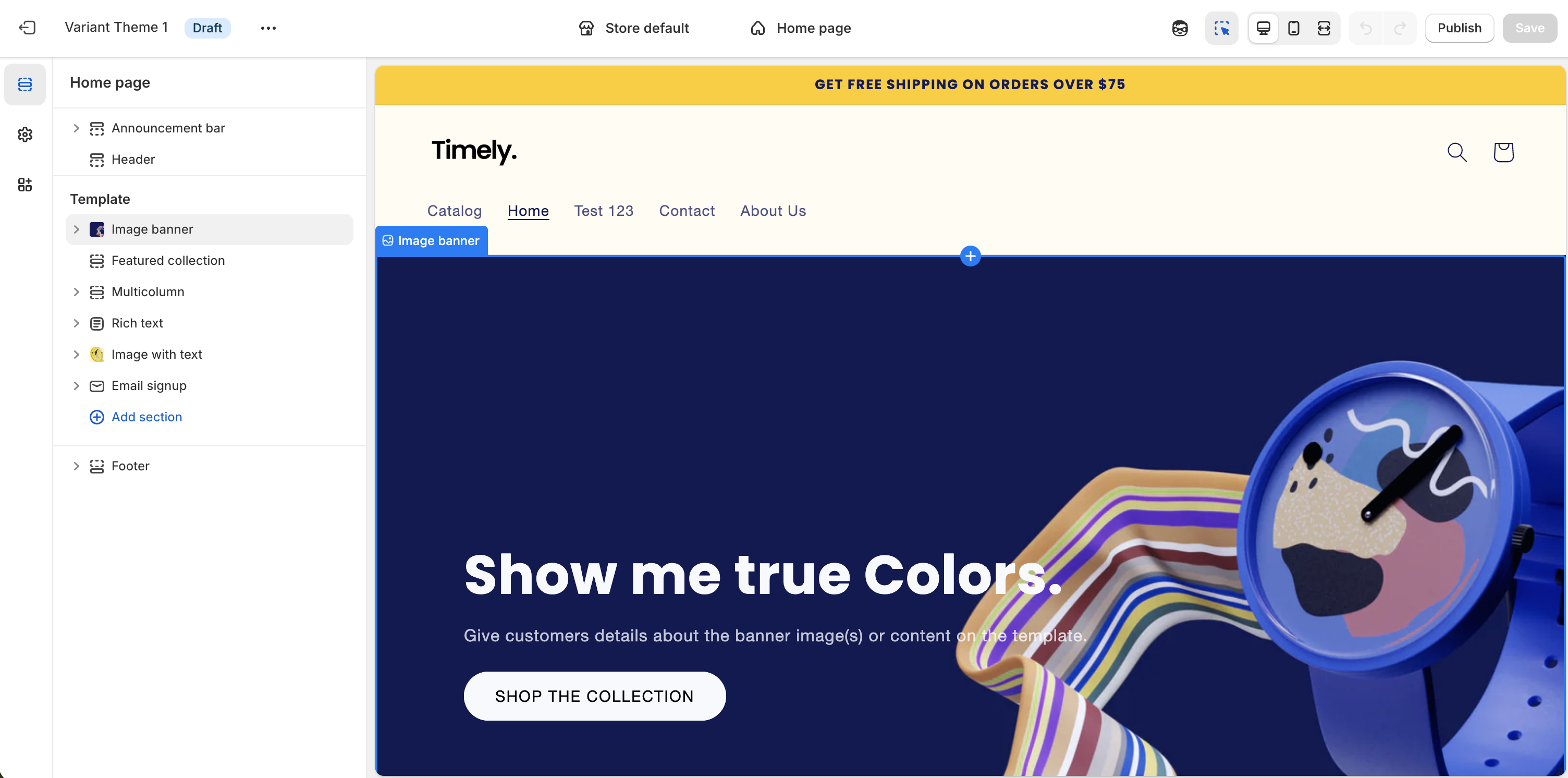
If you need to make changes to your variant theme before testing, click **Edit in Shopify** from the test draft. This opens the Shopify Theme Editor with your variant theme loaded so you can make your changes.
From here you can edit anything in the theme: rearrange sections, swap out images, change the header layout, update your announcement bar, adjust global styles, and more.
If your changes require custom code (like editing Liquid templates, CSS, or JavaScript), you or a developer can open the theme files in the Code Editor instead. Go to **Online Store** > **Themes**, find your variant theme, and click **Edit code**.
When you're done, save your changes and return to Shoplift.
{% hint style="warning" %}
Make sure you're editing the variant theme, not your live theme. Changes to your live theme affect your store immediately, whether or not a test is running.
{% endhint %}
{% endstep %}
{% step %}
### Configure your test settings
Set the following options before launching:
**Traffic allocation**
Choose what percentage of visitors see each version. Shoplift defaults to a 50/50 split, which is recommended for most tests. An even split reaches statistical significance fastest and gives you the clearest results.
**Goal**
Select the primary metric Shoplift uses to determine a winner. **Revenue per visitor (RPV)** is recommended for most tests because it captures both conversion rate and average order value in a single metric. Other options include conversion rate and add-to-cart rate.
**Hypothesis**
Write a short statement explaining what you expect to happen and why. A strong hypothesis follows this framework:
> **If** \[specific change you're making], **then** \[expected outcome], **because** \[reason you believe this].
For example: "If we add customer reviews above the fold on product pages, then RPV will increase, because social proof reduces purchase hesitation and builds trust."
A clear hypothesis helps you interpret results later. Even if your test doesn't win, a good hypothesis tells you *what you learned*.
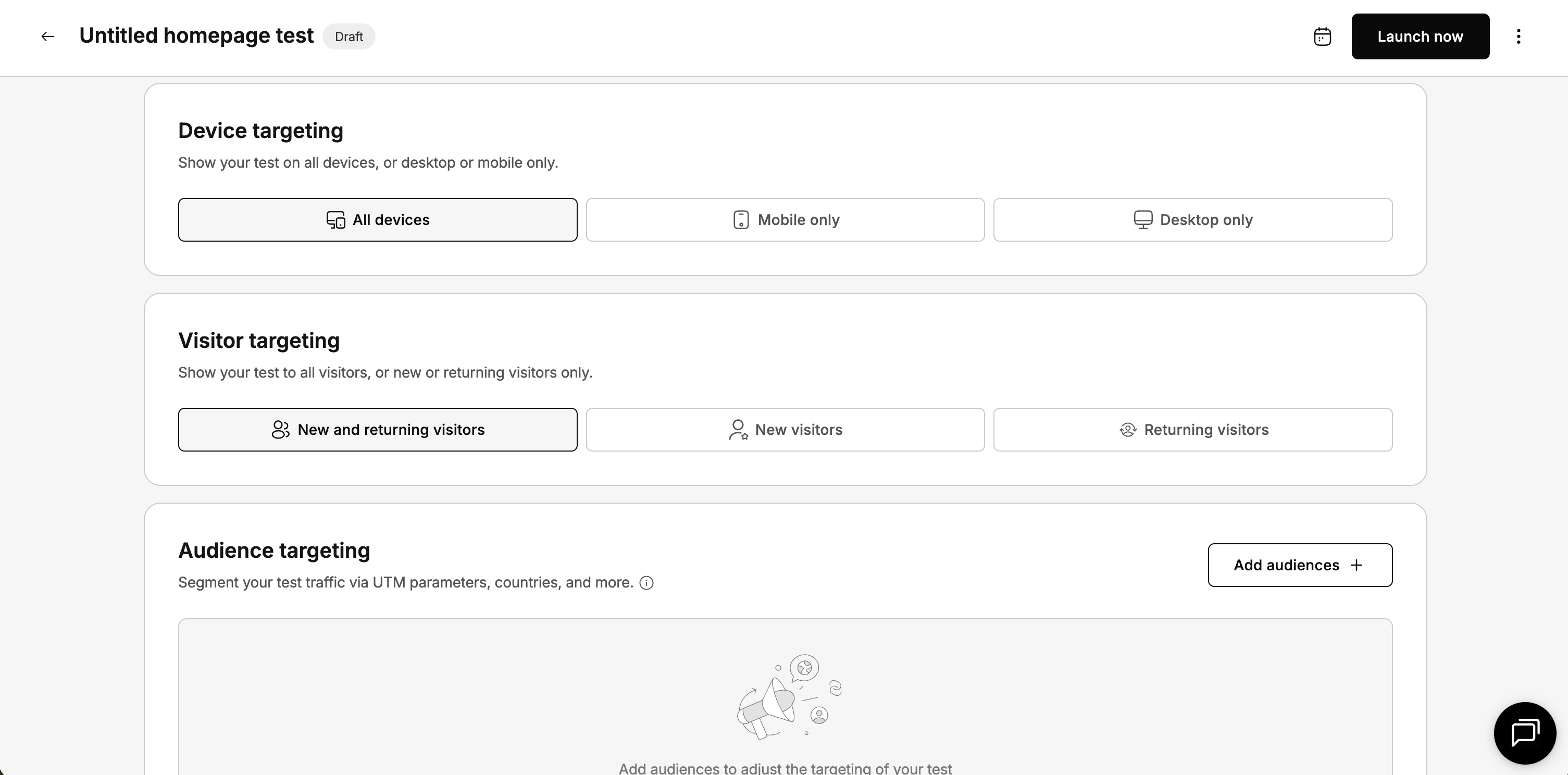
**Device targeting**
Choose which devices your test runs on: **All devices** (recommended for most tests), **Mobile only**, or **Desktop only**. Use device targeting when your change only applies to one device type — for example, a mobile-specific sticky add-to-cart button.
**Visitor targeting**
Narrow your test to specific visitor segments:
* **All visitors**: recommended for most tests
* **New visitors only**: useful for testing first-impression elements like homepage layout
* **Returning visitors only**: useful for testing loyalty-focused features or repeat-purchase flows
{% hint style="info" %}
Visitor targeting is available on Advanced plans and above.
{% endhint %}
**Audience targeting**
For even more precise targeting, set rules based on:
* **UTM parameters**: target visitors from specific campaigns or traffic sources (for example, only test your homepage layout for visitors arriving from your Instagram ads)
* **Geographic location**: target visitors from specific countries or regions
* **Custom rules**: combine multiple conditions to target exactly the audience you want
{% hint style="info" %}
Audience targeting is available on Advanced plans and above.
{% endhint %}
{% endstep %}
{% endstepper %}